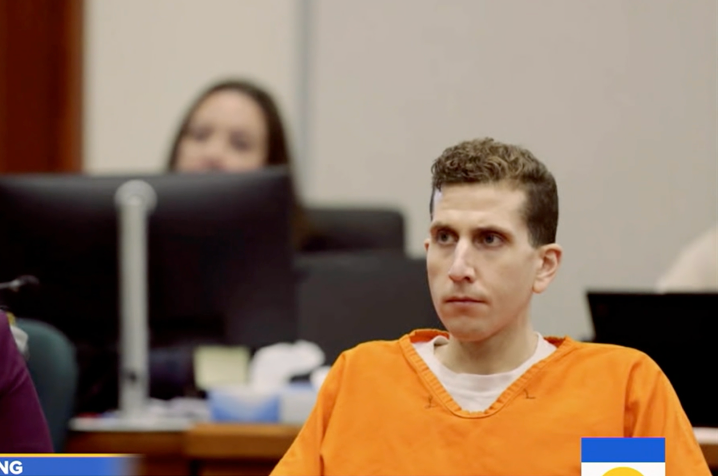
The University of Idaho murders became one of the most closely followed criminal cases in the country. The current legal controversy is no longer primarily about whether the state can prove its case, but whether Bryan Kohberger can undo the guilty plea that was originally thought to have resolved it. On November 13, 2022, four University of Idaho students, Kaylee Goncalves, Madison Mogen, Xana Kernodle, and Ethan Chapin, were murdered in an off-campus home in Moscow, Idaho.[i] Brian Kohberger was charged with the murders of the four students when DNA from a knife sheath left at the crime scene was found to be a match to the defendant.[ii] Additionally, his phone was traced near the victim’s home around twelve time before the murders. Although the motive remained unknown, Kohberger was given four consecutive life sentences for four first-degree murder counts as well as ten years for the burglary. Weeks before his trial was set to start, the convicted took a plea deal, guilty on all charges, to avoid the death penalty. As of September of 2026, a new court date has been issued to overturn his plea. [iii]
The basis of Kohberger’s request of a new court date is due to a handwritten affidavit filed by the convicted, stating that his formal legal team coerced him into entering a plea deal, doing so by withholding information, false promises, and behavior described as bullying. [iv] Courts will soon confront whether a defendant who has already pleaded guilty and been sentenced may withdraw a plea based on alleged ineffective assistance of counsel, coercion, or misinformation.
Some argue that plea bargaining allows defendants to avoid responsibility for heinous crimes, while others feel as though prosecutors offering plea bargains undermine important constitutional protections. A plea bargain is essentially a contract between the convicted and the prosecutor where the defendant waives three constitutional rights: the right to a jury, the right against self-incrimination, and the right to confront witnesses.[v] Though commentators argue these stances, the Supreme Court has ruled that a guilty plea fundamentally requires the defendant to admit in open court that he committed the conduct alleged in the indictment.[vi] Because this admission effectively requires the defendant to testify against himself, the Fifth Amendment protects him from being compelled to make it. Accordingly, a guilty plea is valid only when it is made voluntarily and reflects the defendant’s own free choice.
To ensure that a guilty plea is voluntary and reflects the defendant’s informed choice, the Supreme Court requires courts to follow procedural safeguards before accepting the plea. Specifically, in McCarthy v. United States, the court stated that the court shall not accept a guilty plea without first addressing the defendant personally and determining the plea is made voluntarily with an understanding of the nature of the charge and the consequence of the plea.[vii] Additionally, the court must be satisfied with the factual basis before entering the plea judgment.[viii] With the case occurring in Idaho, it requires the inquiry to extend into Idaho’s procedural rules. Specifically, Idaho Criminal Rule 11 requires the record to show, before acceptance of the plea, the voluntariness of entering the plea, the defendant being informed of the consequences of entering, and the waiver of the constitutional rights included in going to trial.[ix] Following such procedures, Idaho Criminal Rule 33(c) provides basis for setting aside a conviction and permits withdrawal of a plea, allowing such relief only to correct a manifest of injustice.[x]
The Sixth Amendment guarantees criminal defendants the right to effective assistance of counsel. In the plea-bargaining context, counsel must provide advice within the range of competence required by criminal defense attorneys.[xi] To show this prejudice, the defendant must prove to a reasonable probability that but for the counselor’s errors, he would not have pleaded guilty and went to trial instead.[xii] As Kohberger has petitioned for post-conviction relief due to this notion of bad legal advice and false promises, this is the burden he has to prove to successfully withdraw his guilty plea. Prosecutors have moved to dismiss Kohberger’s petition, while pointing to his signed factual-basis document in which he expressly admitted responsibility for the four murders.[xiii]
The Kohberger litigation illustrates the tension between constitutional fairness and finality in criminal proceedings. The legal question is not whether a defendant may simply change his mind, but whether the plea was entered voluntarily, knowingly, and intelligently with constitutionally effective representation. The court’s decision will depend on the evidence supporting his allegations and whether he can satisfy the demanding post-sentencing standard.
[i] See Kayna Whitworth, Sasha Pezenik & Emily Shapiro, Bryan Kohberger Seeks to Withdraw Guilty Plea in University of Idaho Murders: Court Documents, ABC News (July 27, 2026), https://abcnews.com/US/bryan-kohberger-challenge-conviction-university-idaho-murders-court/story?id=135126516 [https://perma.cc/957T-8R3Y].
[ii] Id.
[iii] See Zoe Hussain, Bryan Kohberger Gets New Court Date in Push to Overturn Plea Deal in University of Idaho Murders, US News (Sept. 7, 2026), https://nypost.com/2026/09/07/us-news/bryan-kohberger-gets-new-court-date-in-push-to-overturn-idaho-murders-plea-deal/ [https://perma.cc/98LM-7TJ5].
[iv] Id.
[v] See Plea Bargain, Legal Info. Inst., https://www.law.cornell.edu/wex/plea_bargain [https://perma.cc/7BM5-QUC5] (last visited Oct. 16, 2026) (explaining that ninety to ninety-five percent of cases end in plea bargains and controversy surrounds the effectiveness of pleas).
[vi] See Brady v. United States, 397 U.S. 742, 743 (1970) (stating that a guilty plea could not be withdrawn because the court was convinced that the plea had been entered voluntarily and intelligently).
[vii] McCarthy v. United States, 394 U.S. 459, 472 (1969) (holding that the lower court erred when allowing a guilty plea without making the constitutionally required determination that a guilty plea was voluntary).
[viii] Id.
[ix] I.C.R. 11.
[x] I.C.R. 33(c).
[xi] See Hill v. Lockhart 474 U.S. 52, 63 (1985) (holding that the petitioner failed to establish ineffective assistance of counsel because he did not allege that his attorney knew of a prior conviction underlying the allegedly erroneous advice).
[xii] See Id.
[xiii] See Chris Spargo, Bryan Kohberger Gets October Court Date In Bid To Overturn Plea Deal and Stand Trial For Idaho Murders, People (Sept. 7, 2026), https://people.com/bryan-kohberger-gets-october-court-date-in-bid-to-overturn-plea-deal-12110450 [https://perma.cc/EG8K-LH7A].