Mickey Mouse’s iconic ears are nearly inescapable: on license plates, souvenir keychains, and Florida Disney annual pass decals. Given how deeply embedded Disney’s symbols are in American culture, it is difficult to imagine a legal landscape where Disney no longer holds exclusive rights to those symbols. As of January 1, 2026, the original cartoons of Betty Boop and Pluto join the original Steamboat Willie Mickey in no longer being protected under U.S. copyright law, allowing anyone to adapt these works freely.[i]
Disney’s merchandising empire began modestly in 1930.[ii] While Walt Disney was developing Mickey Mouse and was in need of money, he was offered $300 to license the cartoon.[iii] A New York businessman proposed placing Mickey on pencil tablets, launching Disney’s merchandising, an irony given the multi-billion dollar enterprise that would follow.[iv] That financial necessity propelled Mickey Mouse’s popularity, culminating in the trademark registration in 1930 and the expansion of his presence across cartoons, media references, and consumer media.[v] For nearly a century, Disney has been considered the king of animation, one of the most powerful arsenals of fictional characters in modern history.[vi] Disney has achieved this status through strategic trademark enforcement and meticulous brand control. Disney’s success stems from keeping its earliest characters commercially exclusive long past their artistic birth, that is, until the clock runs out.
Under the original Copyright Act, the term of copyright protection was the life of the author plus fifty years.[vii] Disney’s characters were first at risk of entering the public domain in 1984, until Congress intervened and extended the copyright term to 2004.[viii] In 1998, Disney again sought to protect and preserve its characters through further extensions, a practice that became known as the “Mickey Mouse Protection Act,” resulting in the Sonny Bono Copyright Term Extension Act (“Sonny Bono Act”).[ix] The Sonny Bono Act extended “the duration of copyrights in their renewal term at the time of the effective date of this Act to 95 years from the date such copyrights were originally secured,” making 2024 the year Disney’s earliest characters began entering the public domain.[x] The entry of these characters now marks a pivotal moment in intellectual property law.
Therefore, time has now run out. With Steamboat Willie Mickey serving as the catalyst, characters such as Betty Boop, Nancy Drew, Pluto, and a wide array of early films have joined the public domain earlier this year. Each year, as copyright terms expire, these works become freely available to the public, allowing new creators to reinterpret, adapt, and build upon them.
This legal shift has consequences beyond traditional copyright doctrine. However, Trademark law offers Disney partial insulation, but it is not a perfect substitute. Trademark protection exists to prevent consumer confusion, not to preserve creative monopolies. Mickey Mouse still has his name, likeness, and associated imagery protected by registered trademarks. Because, unlike copyrights, trademarks may provide more permanent protection.[xi] Nevertheless, trademark law cannot be used as a backdoor copyright extension. This can be seen in the Winnie-the-Pooh horror film, where the character is depicted in a gory light, yet nothing about the portrayal would lead an average person to believe it was protected by or associated with Disney’s copyright.[xii]
As public domain characters reenter the creative commons, Disney may still bar uses that falsely suggest sponsorship or affiliation, but it cannot stop all creative uses of those newly public works. To maintain some control over its earliest characters, Disney could continue to enforce trademarks on iconic elements such as character names, logos, and distinctive visual features, even after copyright protections expire. Disney’s concern is not just economic loss but brand dilution. If iconic characters appear in unauthorized forms of media, it can potentially risk harming Disney’s family friendly image by undoing the overall message they have cultivated over the years. Disney could explore new trademark registrations for older characters’ distinctive likenesses or merchandising marks, allowing selective protection of brand identity in the absence of copyright.
Courts should distinguish between what counts as fair use of public domain characters and what counts as trademark infringement, especially online. Clearer standards would assist both parties and reduce unnecessary litigation. Thus, Disney could allow others to use public domain characters, but under clear rules to protect the character’s look and brand, keeping some control even after copyright expires. By focusing on trademarked logos, updated character designs, and unique branding, Disney can maintain brand integrity without overreaching. Ultimately, Disney’s loss of exclusive control over its oldest characters is simply a fulfillment of the law.
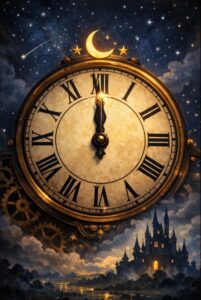
Copyright is not meant to last forever, and the public domain exists precisely to prevent one corporation from owning shared culture indefinitely. Disney is still free to innovate, reimagine, and protect its evolving brand. At the same time, it must coexist with the public domain, as the law intends, with the clock allowing others to adapt these works once the term ends. As the clock strikes midnight on Disney’s earliest copyrights, it is not the end of those characters but simply a handoff. This gives others a chance to create new films, artworks, stories, and adaptations using beloved characters, while Disney can rely on trademarks and brand protection to maintain the integrity of its world once copyright expires.
[i] See Rachel Treisman, The Cultural Works Becoming Public Domain in 2026, From Betty Boop to Nancy Drew, NPR (Dec. 26, 2025, at 5:00 ET), https://www.npr.org/2025/12/26/nx-s1-5649395/public-domain-2026-copyright-betty-boop-pluto [https://perma.cc/8WEC-KVJC]; see also Jennifer Jenkins, Mickey, Disney, and the Public Domain: a 95-Year Love Triangle, Duke Ctr. for the Study of Pub. Domain, https://web.law.duke.edu/cspd/mickey [https://perma.cc/82CL-5UVF] (last visited Mar. 3, 2026).
[ii] See Disney History, Walt Disney Archives, https://d23.com/disney-history [https://perma.cc/TX9U-YTW5] (last visited Mar. 3, 2026).
[iii] Id.
[iv] Id.
[v] See Harper Banks, Disney Patents and Trademarks, Beautiful Tomorrow (June 8, 2023), https://beautifultomorrow.substack.com/p/disney-patents-and-trademarks [https://perma.cc/Y6P2-6XMS].
[vi] See Sarah Whitten, Disney is Dominating the Animation Category and No Other Studios Seems to be Able to Compete, CNBC (Nov. 30, 2019, at 1:02 ET), https://www.cnbc.com/2019/11/30/disneys-dominates-animation-category-why-other-studios-cant-compete.html [https://perma.cc/TKN4-4GTH].
[vii] See 17 U.S.C. § 302 (1998); see also H.R. Rep. No. 94-1476, at 133 (1976) U.S.C.C.A.N. 5659, 5749
(. . . [T]here appears to be strong support for the principle, as embodied in the bill, of a copyright term consisting of the life of the author and 50 years after his death. . . .The Register of Copyrights now regards a life-plus-50 term as the foundation of the entire bill).
[viii] See Noor Nanji, Disney’s Earliest Mickey and Minnie Mouse Enter Public Domain as US Copyright Expires, BBC (Jan. 1, 2024), https://www.bbc.com/news/entertainment-arts-67833411 [https://perma.cc/E3TF-GWSJ].
[ix] Id.
[x] Sonny Bono Copyright Term Extension Act, S. 505, 105th Cong. § 102 (1998).
[xi] See The Importance of Trademark Protection When Copyrighted Works Enter the Public Domain, Corsearch Blog (Mar. 13, 2023), https://corsearch.com/content-library/blog/the-importance-of-trademark-protection-when-copyrighted-works-enter-the-public-domain [https://perma.cc/7398-G7DG] (“While copyright protection eventually expires, trademarks can be retained in perpetuity – provided that the mark continues to be in use and doesn’t fall victim to genericide.”).
[xii] See Rachel Reed, No Mickey Mouse Operation, Harv. L. Today (Oct. 6, 2023), https://hls.harvard.edu/today/harvard-law-i-p-expert-explains-how-disney-has-influenced-u-s-copyright-law-to-protect-mickey-mouse-and-winnie-the-pooh [https://perma.cc/MRP6-6T2Y].